
Introduction to Seth, the Egyptian God
Seth, also known as Set or Sutekh, was a significant deity in ancient Egyptian mythology. He was often depicted as a mysterious and complex figure, associated with chaos, disorder, and the desert. Seth was the son of the earth god Geb and the sky goddess Nut, and his siblings included Isis, Osiris, and Nephthys. In this blog post, we will delve into the mythology and characteristics of Seth, exploring his role in Egyptian mythology and his significance in ancient Egyptian culture.
Characteristics and Associations

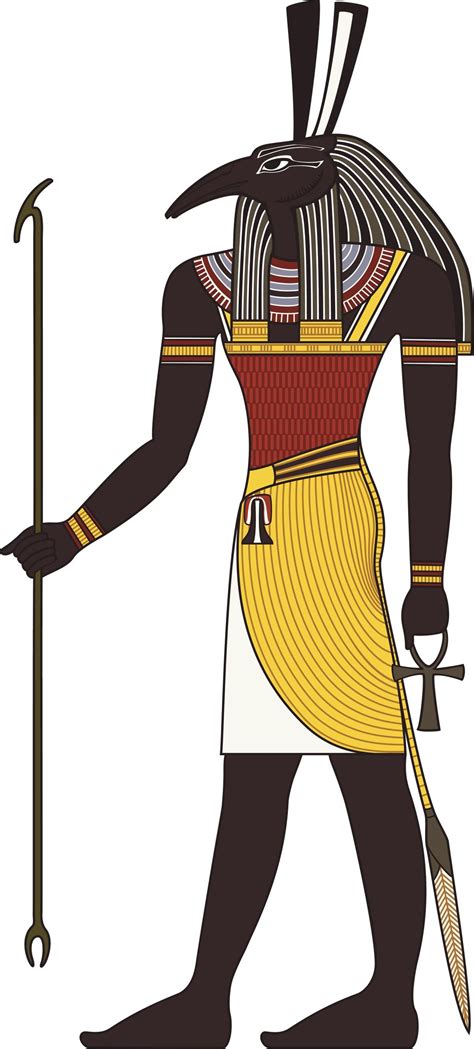
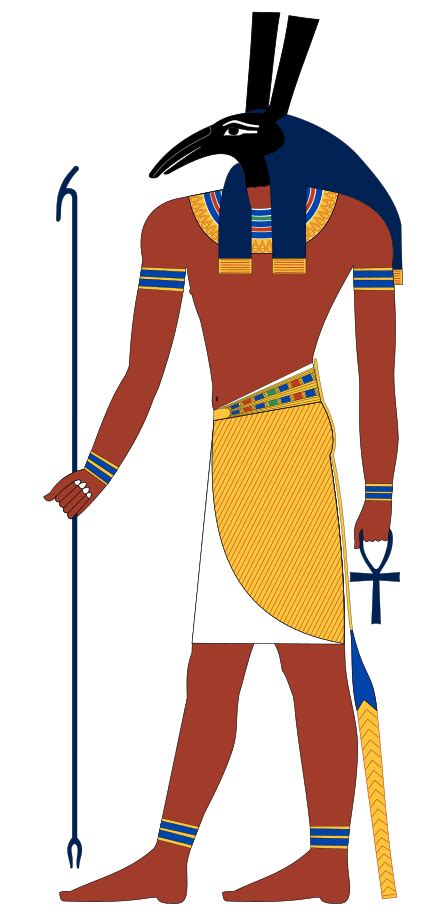
Seth was often depicted as a man with the head of an unknown animal, which has been interpreted as a composite of various animals, such as a jackal, a fox, or an antelope. This unique representation reflected his association with the unknown, the foreign, and the uncontrolled forces of nature. Seth was also linked to the color red, which symbolized chaos, violence, and the desert sands. His primary role was that of a god of chaos, disorder, and confusion, often opposing the gods of order and harmony, such as Osiris and Isis.
Mythological Role
In Egyptian mythology, Seth played a crucial role in the legend of Osiris, where he was the primary antagonist. According to the myth, Seth murdered his brother Osiris, cutting his body into pieces and scattering them across the land. Isis, Osiris’ wife, collected the pieces and resurrected him long enough to conceive their son Horus. Seth, however, continued to oppose Horus, and the two engaged in a fierce battle. Eventually, Horus emerged victorious, and Seth was forced to flee. This mythological struggle between Seth and the other gods represented the eternal conflict between chaos and order.
Worship and Cult

Despite his association with chaos and disorder, Seth was still worshiped in ancient Egypt, particularly in the eastern desert regions. His cult was significant in the city of Avaris, where he was revered as a god of fertility and prosperity. The worship of Seth was also linked to the Hyksos, a group of foreign invaders who conquered Egypt during the Second Intermediate Period. The Hyksos adopted Seth as their patron deity, and their influence helped spread his cult throughout Egypt.
Cosmological Significance

In Egyptian cosmology, Seth was associated with the desert and the foreign lands that lay beyond the borders of Egypt. He was seen as a god of the unknown, the uncontrolled forces of nature, and the chaos that threatened the established order. Seth’s role in maintaining the balance of the universe was crucial, as he ensured that the forces of chaos and disorder were kept in check. This balance was essential to the Egyptians, who believed that the maintenance of order (ma’at) was necessary for the survival of the universe.
Symbolism and Legacy

Seth’s symbolism extends beyond ancient Egyptian mythology, influencing the development of Western occultism and esoteric traditions. His association with chaos, disorder, and the unknown has led to interpretations as a symbol of the unconscious, the shadow self, or the repressed aspects of human nature. In modern times, Seth has become a cultural icon, representing the complexities and contradictions of human existence. His legacy can be seen in literature, art, and popular culture, where he is often depicted as a symbol of rebellion, nonconformity, and the power of chaos.
🔥 Note: The worship of Seth was not uniform throughout ancient Egypt, and his cult was often suppressed by the ruling authorities, who preferred to promote the worship of more "orderly" deities like Osiris and Isis.
As we reflect on the significance of Seth in ancient Egyptian mythology, it becomes clear that his role was multifaceted and complex. He represented the forces of chaos and disorder, yet was also revered as a god of fertility and prosperity. His legacy extends beyond ancient Egypt, influencing Western occultism and esoteric traditions. The study of Seth offers a unique perspective on the human experience, highlighting the importance of balance and the interplay between order and chaos.
Who was Seth in Egyptian mythology?

+
Seth was a significant deity in ancient Egyptian mythology, often depicted as a mysterious and complex figure, associated with chaos, disorder, and the desert.
What was Seth’s role in the myth of Osiris?

+
Seth played the primary antagonist in the legend of Osiris, where he murdered his brother Osiris and opposed his nephew Horus, representing the eternal conflict between chaos and order.
Was Seth worshiped in ancient Egypt?

+
Yes, despite his association with chaos and disorder, Seth was still worshiped in ancient Egypt, particularly in the eastern desert regions and in the city of Avaris, where he was revered as a god of fertility and prosperity.