
Introduction to Paraphrasing

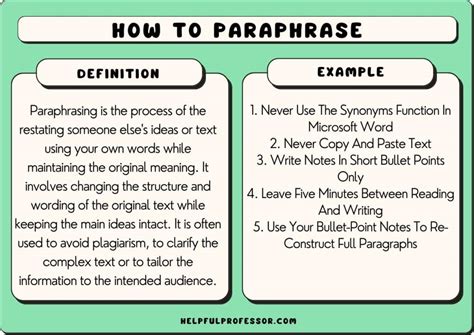
Paraphrasing is a crucial skill that involves expressing someone else’s ideas or words in your own language, while maintaining the original meaning and context. It is an essential tool for writers, researchers, and students, as it allows them to convey complex information in a unique and personalized way. In this article, we will discuss the importance of paraphrasing and provide 5 valuable tips to help you master this skill.
Why Paraphrasing is Important
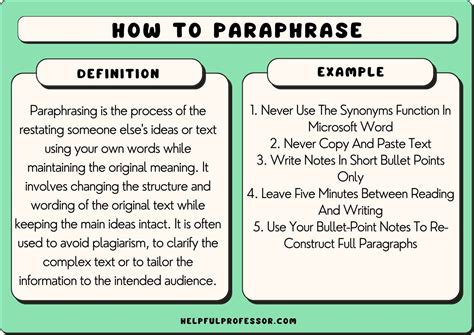
Paraphrasing is important for several reasons. Firstly, it helps to avoid plagiarism, which is a serious academic offense that can result in severe consequences. By rephrasing someone else’s words, you can ensure that your work is original and unique. Secondly, paraphrasing enables you to understand and analyze complex information more effectively. When you rephrase someone else’s ideas, you are forced to think critically and comprehend the underlying meaning. Finally, paraphrasing allows you to convey information in your own voice, which is essential for building your brand and establishing your authority in a particular field.
5 Paraphrase Tips

Here are 5 valuable tips to help you improve your paraphrasing skills: * Read and understand the original text: Before you start paraphrasing, make sure you have read and understood the original text. Take notes, highlight important points, and ask questions if you are unsure about anything. * Use your own words: Avoid using the same words or phrases as the original text. Instead, use synonyms, antonyms, or phrases that convey the same meaning. * Change the sentence structure: Alter the sentence structure to make it unique and original. For example, you can change a complex sentence into a simple one, or vice versa. * Use examples and illustrations: Use examples and illustrations to explain complex concepts and make your paraphrase more engaging and interesting. * Check for accuracy: Finally, check your paraphrase for accuracy and ensure that it conveys the same meaning as the original text.
Common Paraphrasing Mistakes

When paraphrasing, it is essential to avoid common mistakes that can result in inaccurate or incomplete information. Some of these mistakes include: * Using too many quotes: While quotes can be useful, using too many can make your paraphrase seem like a patchwork of other people’s ideas. * Not checking for accuracy: Failing to check your paraphrase for accuracy can result in errors and misinterpretations. * Not using your own words: Using the same words or phrases as the original text can make your paraphrase seem unoriginal and lazy.
📝 Note: Paraphrasing is a skill that takes time and practice to develop. Be patient, and don't be afraid to make mistakes – they are an essential part of the learning process.
Paraphrasing Tools and Resources

There are several tools and resources available to help you improve your paraphrasing skills. Some of these include:
| Tool/Resource | Description |
|---|---|
| Paraphrasing software | Software that helps you to paraphrase text quickly and efficiently |
| Online tutorials | Tutorials that provide tips and guidance on paraphrasing |
| Writing guides | Guides that provide advice on writing and paraphrasing |
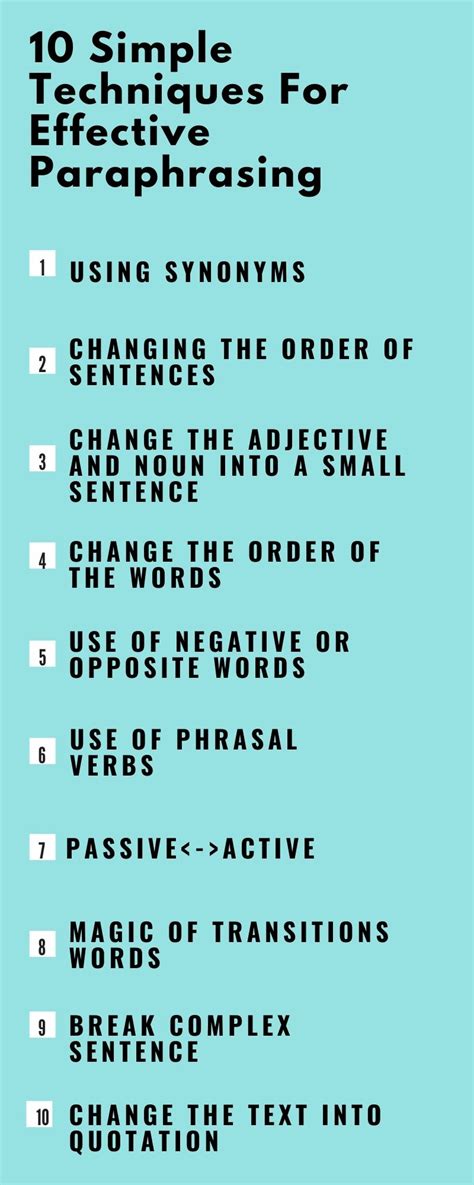
In summary, paraphrasing is a valuable skill that can help you to convey complex information in a unique and personalized way. By following the 5 paraphrase tips outlined in this article, you can improve your paraphrasing skills and become a more effective writer and communicator.
What is paraphrasing?

+
Paraphrasing is the process of expressing someone else’s ideas or words in your own language, while maintaining the original meaning and context.
Why is paraphrasing important?

+
Paraphrasing is important because it helps to avoid plagiarism, enables you to understand and analyze complex information, and allows you to convey information in your own voice.
How can I improve my paraphrasing skills?

+
You can improve your paraphrasing skills by reading and understanding the original text, using your own words, changing the sentence structure, using examples and illustrations, and checking for accuracy.