
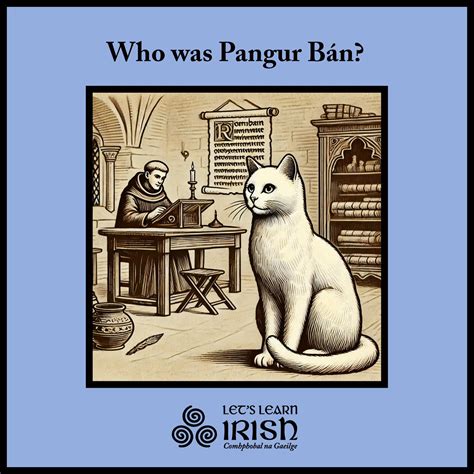
Introduction to Pangur Ban

The poem Pangur Ban is an old Irish poem that has been fascinating readers for centuries. It tells the story of a white cat, Pangur Ban, and its owner, a monk, who live together in a monastery. The poem explores the themes of companionship, study, and the pursuit of knowledge. In this blog post, we will delve into five interesting facts about Pangur Ban and its significance in literature.
The Origins of Pangur Ban

Pangur Ban is an old Irish poem that dates back to the 9th century. The poem is written in the margins of a Latin manuscript, which suggests that it was written by a monk who was studying Latin. The poem is a beautiful example of the intersection of Irish and Latin cultures during the Middle Ages. The fact that the poem was written in the margins of a manuscript highlights the importance of Pangur Ban as a piece of marginalia that has become a significant work of literature in its own right.
The Meaning of Pangur Ban

The name Pangur Ban is derived from the Irish language, with “Pangur” meaning “fuller” or “white” and “Ban” meaning “white” or “fair”. The name is often translated to “White Fuller” or “Fair White Cat”. The name reflects the cat’s white coat and its association with purity and innocence. The poem also explores the theme of whiteness, with the cat’s white fur symbolizing clarity and simplicity.
The Structure of the Poem

The poem Pangur Ban consists of seven stanzas, each with four lines. The poem follows a consistent rhyme scheme and meter, with each stanza exploring a different aspect of the relationship between the monk and the cat. The structure of the poem is notable for its use of parallelism, with the monk and the cat engaging in similar activities, such as studying and hunting. The parallelism highlights the similarities between the human and animal worlds and emphasizes the theme of companionship.
The Themes of Pangur Ban

The poem Pangur Ban explores several themes, including: * Companionship: The poem highlights the close relationship between the monk and the cat, who live and work together in the monastery. * Study: The poem explores the theme of study and the pursuit of knowledge, with the monk and the cat both engaging in activities that require focus and concentration. * Nature: The poem celebrates the natural world, with the cat’s hunting and the monk’s study of nature being central to the poem. * Spirituality: The poem touches on the theme of spirituality, with the monk’s study of Latin and the cat’s innocence reflecting the spiritual values of the monastery.
The Significance of Pangur Ban
Pangur Ban is a significant work of literature that has been celebrated for its beauty and simplicity. The poem has been translated into many languages and has inspired numerous adaptations and interpretations. The poem’s exploration of the human-animal relationship and its celebration of the natural world make it a timeless and universal work of literature. The fact that the poem was written in the margins of a manuscript highlights the importance of Pangur Ban as a piece of marginalia that has become a significant work of literature in its own right.
🐱 Note: The poem Pangur Ban is a beautiful example of the intersection of Irish and Latin cultures during the Middle Ages, and its significance extends beyond its literary value to its cultural and historical importance.
In summary, Pangur Ban is a fascinating poem that explores the themes of companionship, study, nature, and spirituality. The poem’s significance lies in its beauty, simplicity, and universality, making it a timeless work of literature that continues to inspire readers and scholars today. The poem’s exploration of the human-animal relationship and its celebration of the natural world make it a unique and important work of literature that deserves to be celebrated and studied.
What is the meaning of the name Pangur Ban?

+
The name Pangur Ban is derived from the Irish language, with “Pangur” meaning “fuller” or “white” and “Ban” meaning “white” or “fair”. The name is often translated to “White Fuller” or “Fair White Cat”.
What is the structure of the poem Pangur Ban?

+
The poem Pangur Ban consists of seven stanzas, each with four lines. The poem follows a consistent rhyme scheme and meter, with each stanza exploring a different aspect of the relationship between the monk and the cat.
What are the themes of the poem Pangur Ban?

+
The poem Pangur Ban explores several themes, including companionship, study, nature, and spirituality. The poem highlights the close relationship between the monk and the cat, who live and work together in the monastery.
