
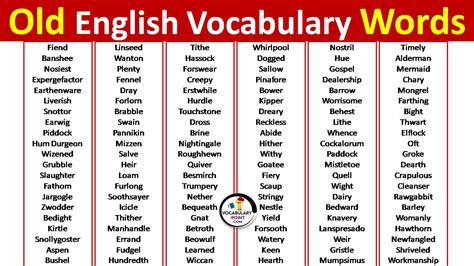
Introduction to Forgotten Vocabulary

The English language is vast and dynamic, with words constantly being added and removed from our dictionaries. However, some words that were once popular have fallen out of use over time, only to be rediscovered by language enthusiasts and writers looking to add some flair to their writing. In this article, we’ll explore 7 old words that have been revived in recent years, and examine their meanings, origins, and how they can be used in modern contexts.
1. Whilom

The word whilom is an adverb that means “at some time in the past” or “formerly.” It’s a rather formal word that was commonly used in the 16th to 18th centuries, but has since fallen out of favor. However, with the rise of historical fiction and fantasy writing, whilom has seen a resurgence in popularity. For example: “Whilom, the village was a thriving community, but now it lies abandoned.”
2. Thixotropy

Thixotropy is a noun that refers to the property of a fluid that becomes less viscous and more fluid when agitated or shaken, and returns to its original viscosity when left still. This word was coined in the 1930s, but has only recently gained widespread use. It’s a useful term for scientists and engineers, and can also be used in more creative contexts. For example: “The thixotropy of the paint made it easy to mix and apply, but it quickly returned to its original consistency once it was left to dry.”
3. Ultracrepidarian

An ultracrepidarian is a noun that refers to a person who gives opinions on matters beyond their knowledge or expertise. This word has been around since the 19th century, but has seen a significant increase in use in recent years, particularly in online discussions and social media. For example: “The ultracrepidarian blogger wrote a scathing review of the new restaurant, despite having never eaten there before.”
4. Velleity

Velleity is a noun that refers to a mild or slight desire, often used to describe a whim or a passing fancy. This word has been around since the 15th century, but has only recently gained popularity. It’s a useful term for writers and poets, and can add a touch of elegance to descriptive passages. For example: “She felt a velleity for ice cream, but decided to resist the temptation.”
5. Borborygmi

Borborygmi is a noun that refers to rumbling noises produced by the movement of gas through the intestines, often after eating. This word has been around since the 19th century, but has seen a significant increase in use in recent years, particularly in medical and scientific contexts. For example: “The patient experienced severe borborygmi after eating a large meal, which was a symptom of their underlying digestive issues.”
6. Selenite

Selenite is a noun that refers to a type of crystal formed from the evaporation of salt water. This word has been around since the 18th century, but has seen a resurgence in popularity in recent years, particularly in the context of crystal healing and spiritual practices. For example: “The selenite crystal was said to have purifying properties, and was often used in meditation and energy work.”
7. Cacography

Cacography is a noun that refers to poor or ungrammatical writing or handwriting. This word has been around since the 17th century, but has seen a significant increase in use in recent years, particularly in the context of online communication and social media. For example: “The cacography of the text message made it difficult to decipher, and the recipient had to ask for clarification.”
📝 Note: When using these words in your writing, be sure to use them in context and with precision, as they can add a touch of elegance and sophistication to your language.
In addition to these 7 words, there are many other old words that have been revived in recent years. Some examples include: * Gallimaufry: a dish made from a mixture of leftover food * Sesquipedalian: given to using long words * Tintinnabulation: a ringing or tinkling sound, especially of a bell * Ultracrepidarian: a person who gives opinions on matters beyond their knowledge or expertise
These words can add a touch of elegance and sophistication to your writing, and can help you to express yourself more precisely and creatively.
| Word | Meaning | Example Sentence |
|---|---|---|
| Whilom | At some time in the past | Whilom, the village was a thriving community. |
| Thixotropy | The property of a fluid that becomes less viscous when agitated | The thixotropy of the paint made it easy to mix and apply. |
| Ultracrepidarian | A person who gives opinions on matters beyond their knowledge | The ultracrepidarian blogger wrote a scathing review of the new restaurant. |
| Velleity | A mild or slight desire | She felt a velleity for ice cream, but decided to resist the temptation. |
| Borborygmi | Rumbling noises produced by the movement of gas through the intestines | The patient experienced severe borborygmi after eating a large meal. |
| Selenite | A type of crystal formed from the evaporation of salt water | The selenite crystal was said to have purifying properties. |
| Cacography | Poor or ungrammatical writing or handwriting | The cacography of the text message made it difficult to decipher. |
In summary, these 7 old words have been revived in recent years, and can add a touch of elegance and sophistication to your writing. By using these words in context and with precision, you can express yourself more precisely and creatively, and add a touch of flair to your language.
As we reflect on the language we use, it becomes clear that the revival of old words is not just a matter of nostalgia, but also a way to enrich our vocabulary and express ourselves more effectively. Whether you’re a writer, a poet, or simply a language enthusiast, exploring the world of forgotten words can be a rewarding and fascinating experience.
What is the origin of the word “whilom”?

+
The word “whilom” comes from the Old English words “hwil” meaning “time” and “om” meaning “at some time in the past”. It has been used in English since the 16th century to describe a past event or situation.
How can I use the word “thixotropy” in a sentence?

+
The word “thixotropy” can be used to describe the property of a fluid that becomes less viscous when agitated or shaken. For example: “The thixotropy of the paint made it easy to mix and apply, but it quickly returned to its original consistency once it was left to dry.”
What is the difference between “velleity” and “desire”?

+
The word “velleity” refers to a mild or slight desire, often used to describe a whim or a passing fancy. In contrast, the word “desire” refers to a stronger or more intense feeling of wanting something. For example: “She felt a velleity for ice cream, but her desire for a healthy snack won out in the end.”
Can I use the word “borborygmi” in a medical context?

+
Yes, the