

Adding a Watermark in Microsoft Word

Microsoft Word is a powerful word processing tool that offers a wide range of features to enhance the appearance and security of documents. One such feature is the ability to add a watermark to a document. A watermark is a faded image or text that appears in the background of a page, often used to indicate the document’s status, such as “Confidential” or “Draft.” In this article, we will explore the steps to add a watermark in Microsoft Word.
Why Add a Watermark?
Before we dive into the process of adding a watermark, let’s discuss why you might want to use this feature. Watermarks can serve several purposes: * Security: A watermark can help prevent unauthorized use or distribution of a document by clearly indicating its status or ownership. * Branding: A custom watermark can be used to promote a company’s logo or brand identity. * Organization: Watermarks can help categorize documents, such as marking drafts or confidential files.
Steps to Add a Watermark

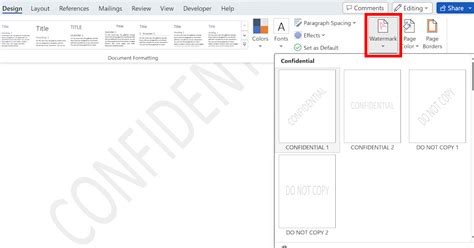
To add a watermark in Microsoft Word, follow these steps: * Open your document in Microsoft Word. * Click on the Design tab in the ribbon. * Select Watermark from the Page Background group. * Choose from the pre-defined watermarks, such as Confidential or Urgent, or select Custom Watermark to create your own. * If you choose Custom Watermark, you can select an image from your computer or use text to create a watermark. * Adjust the Scale and Washout settings to fine-tune the appearance of the watermark.
Using a Custom Image as a Watermark

If you want to use a custom image as a watermark, you can do so by following these steps: * Click on the Custom Watermark option in the Watermark dialog box. * Select Picture Watermark and click on Select Picture. * Choose an image from your computer and adjust the Scale and Washout settings as needed.
Removing a Watermark

To remove a watermark from a document, follow these steps: * Click on the Design tab in the ribbon. * Select Watermark from the Page Background group. * Choose No Watermark from the dropdown menu.
📝 Note: When working with watermarks, it's essential to save your document regularly to ensure that your changes are preserved.
Tips and Variations

Here are some additional tips and variations to keep in mind when working with watermarks: * Use a light-colored watermark to avoid interfering with the text in your document. * Experiment with different font styles and sizes to create a unique watermark. * Consider using a combination of text and images to create a custom watermark.
| Watermark Type | Description |
|---|---|
| Text Watermark | A text-based watermark that can be customized with different fonts and sizes. |
| Picture Watermark | An image-based watermark that can be used to add a custom logo or graphic. |
In summary, adding a watermark in Microsoft Word is a simple process that can help enhance the appearance and security of your documents. By following the steps outlined in this article, you can create a custom watermark that meets your needs and adds a professional touch to your documents. The key points to remember are to choose the right type of watermark, adjust the settings to fine-tune the appearance, and save your document regularly to preserve your changes. With these tips and techniques, you can create effective watermarks that serve your purposes and add value to your documents.
What is the purpose of a watermark in a document?

+
A watermark is used to indicate the status or ownership of a document, and can also be used for branding or organization purposes.
How do I add a custom image as a watermark in Microsoft Word?

+
To add a custom image as a watermark, select the Custom Watermark option and choose Picture Watermark. Then, select an image from your computer and adjust the settings as needed.
Can I remove a watermark from a document?

+
Yes, you can remove a watermark from a document by selecting the No Watermark option from the Watermark dropdown menu.